
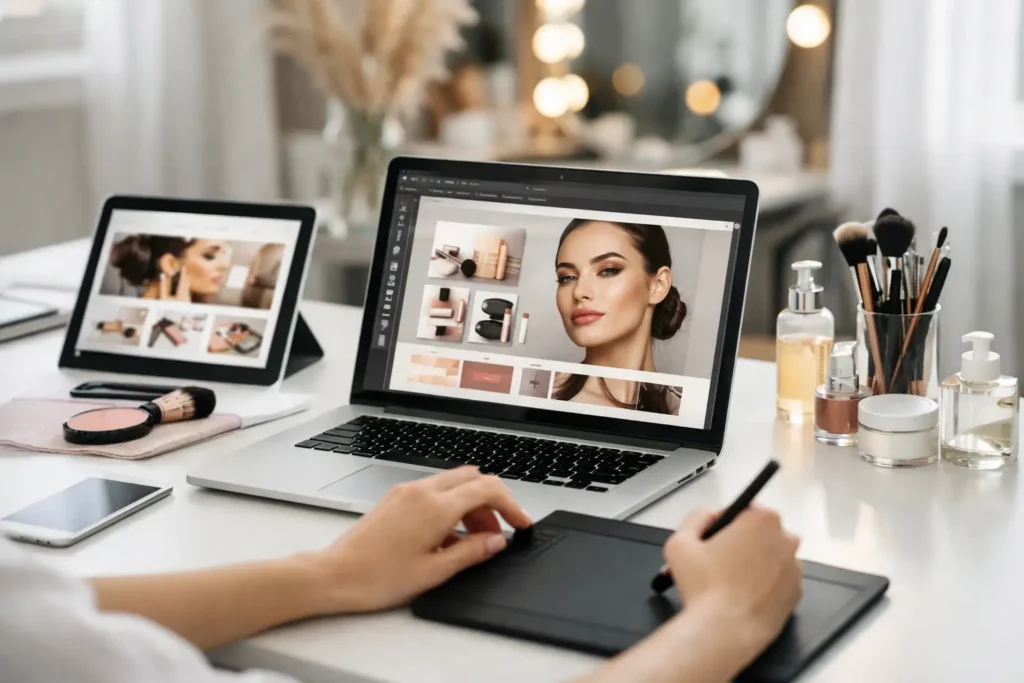
A beauty brand can lose a sale in seconds if its website feels outdated, confusing, or hard to use on mobile. That is why web design services for beauty industry businesses are not just about looks. They are about trust, bookings, product sales, and making the customer feel confident before they ever walk into your salon, spa, clinic, or online store.
For beauty businesses, first impressions carry real financial weight. People judge quality fast. If your site looks polished, loads quickly, and makes it easy to book or buy, visitors are more likely to move forward. If it does not, many will leave and choose a competitor that feels more reliable.
Why beauty brands need a different type of website
Beauty is a visual, trust-driven market. Customers are not only comparing prices. They are comparing atmosphere, credibility, results, and brand identity. A generic business website usually misses that.
A beauty website has to do more than present information. It needs to communicate style, cleanliness, professionalism, and consistency. For a med spa, that may mean a more clinical and premium feel. For a makeup artist, it may mean strong portfolio presentation and social proof. For a skincare ecommerce brand, it may mean clear product pages, ingredient education, and a checkout experience that feels easy and secure.
This is where specialized web design matters. The right structure supports how beauty customers actually make decisions. They want to see photos, services, reviews, pricing cues, FAQs, and a clear next step. They often browse on their phone, compare options quickly, and expect a modern digital experience.
What good web design services for beauty industry businesses include
A strong website for the beauty sector starts with strategy, not colors or fonts. Design should reflect your positioning and business goals. Are you trying to increase appointments, sell products, attract premium clients, launch a personal brand, or expand to new markets? The answer shapes the entire site.
The most effective web design services for beauty industry brands usually include custom layout planning, mobile-first design, fast load speed, strong branding, and conversion-focused page structure. That means every section has a job. Your hero section should communicate what you offer and who it is for. Your service pages should reduce uncertainty. Your booking flow should remove friction. Your visuals should support credibility, not just decoration.
There is also a technical side that many business owners only notice when it goes wrong. A beautiful site that loads slowly, breaks on mobile, or confuses search engines will not perform the way it should. Design and functionality need to work together.
The pages that usually matter most
Not every beauty business needs a huge website. In many cases, a focused site performs better than a bloated one. What matters is having the right pages, written and designed with the customer journey in mind.
A homepage should quickly explain your offer, show the brand feel, and direct users to the next step. Service pages are essential for salons, spas, cosmetic professionals, and clinics because they help people understand treatments, pricing context, benefits, and expectations. An about page matters more than many owners think because beauty clients often buy into the person or team behind the brand.
For ecommerce beauty brands, product pages do heavy lifting. They need clean photography, persuasive copy, trust signals, and enough information to answer buying questions without overwhelming the customer. For local businesses, contact and location details should be easy to find. If users have to hunt for your address, hours, or booking button, you are creating unnecessary drop-off.
Gallery pages can help, but only if they are curated well. A poor-quality gallery can hurt more than help. Before-and-after results, treatment spaces, team photos, and branded visuals should feel professional and consistent.
Design choices that directly affect bookings and sales
Many beauty businesses assume web design is mostly aesthetic. In reality, small design decisions can impact conversion rates in a big way.
Mobile design is one of the biggest examples. A large share of beauty customers discover brands on Instagram, Google, or ads and then visit the website from their phone. If the mobile version is awkward, slow, or crowded, you lose momentum immediately. Buttons need to be obvious. Menus need to be simple. Forms need to be short enough to complete without frustration.
Visual hierarchy also matters. The user should know where to look first, what to do next, and how to take action. If every part of the page competes for attention, the customer does nothing. Good design guides behavior without feeling pushy.
Then there is trust. In the beauty industry, trust can come from testimonials, certifications, media mentions, experience, transparent policies, quality photos, and clear explanations. Design should present these elements in a way that feels natural. Too little trust-building and visitors hesitate. Too much clutter and the page starts to feel noisy.
SEO and web design should be planned together
A common mistake is treating design and SEO as separate projects. For beauty businesses that want long-term visibility, they should be aligned from the start.
A website can look excellent and still struggle to rank if the structure is weak. Service pages should target what real customers search for. URL structure, heading hierarchy, internal organization, page speed, and local relevance all matter. If you redesign a site without considering SEO, you may end up with a prettier version that gets less traffic.
This is especially important for salons, estheticians, med spas, lash artists, nail studios, dermatology clinics, and beauty ecommerce brands competing in crowded markets. Search visibility is often one of the most cost-effective ways to generate consistent leads. A website should support that growth, not limit it.
That is why businesses often benefit from working with a team that understands both design and digital marketing. At SEO Sin Fronteras, that combination is part of the value: building sites that not only look professional but also support measurable growth.
What to avoid when hiring a web design provider
Not all web design services are built for performance. Some agencies focus heavily on visuals but offer little strategic guidance. Others use generic templates that make every business look the same. For a beauty brand, that can weaken positioning fast.
Be careful with providers who cannot explain how the site will support bookings, leads, or sales. Design without a business goal is decoration. Also watch for poor communication. A website project needs collaboration, feedback, and clarity. If the process feels vague from the beginning, delays and misalignment usually follow.
Another issue is overdesign. Beauty brands do need a strong visual presence, but too many effects, animations, or trendy elements can distract users and slow the site down. What looks impressive in a presentation does not always perform well in real life.
The best partner is one that listens carefully, understands your business model, and builds with both brand image and results in mind.
When a template site is enough and when it is not
There are situations where a simple template website can work. If you are a solo beauty professional just starting out, with a limited service menu and a small budget, a clean template with the right setup may be enough for now.
But if you are growing, investing in ads, competing in a premium market, selling products online, or trying to stand out locally, custom strategy becomes much more valuable. Once your website starts influencing lead quality, average order value, and brand perception, the cost of a weak site becomes higher than the cost of improving it.
That is the trade-off many businesses miss. The cheapest website is not always the most affordable option over time.
How to know if your current site is holding you back
If your traffic is decent but inquiries are low, your design may not be converting. If people ask repetitive questions, your pages may not be clear enough. If your bounce rate is high on mobile, usability may be the issue. If your brand feels premium in person but average online, your website may be sending the wrong message.
You should also pay attention to practical signs. Is it easy to update content? Does your booking system work well? Are your service pages organized properly? Can someone understand your value in less than ten seconds? These details shape performance more than most businesses realize.
A website should reduce friction, not create it. For beauty businesses, that often means balancing emotion and clarity. People want to feel inspired, but they also want enough information to feel safe and ready to buy.
A smart website becomes part of your sales process
The best beauty websites do not sit online like digital brochures. They actively support marketing, sales, and retention. They help turn ad traffic into leads, social traffic into bookings, and search traffic into long-term growth. They also make your business look more established, which influences pricing power and client trust.
If your business depends on image, reputation, and customer experience, your website is not a side asset. It is part of the service experience itself. A well-designed site sets expectations, answers objections, and moves people toward action with less effort from your team.
For beauty brands that want to grow with more consistency, better positioning, and stronger conversion rates, web design deserves the same level of attention as branding, service quality, and marketing. When those pieces work together, the website stops being a placeholder and starts becoming a real business tool.