
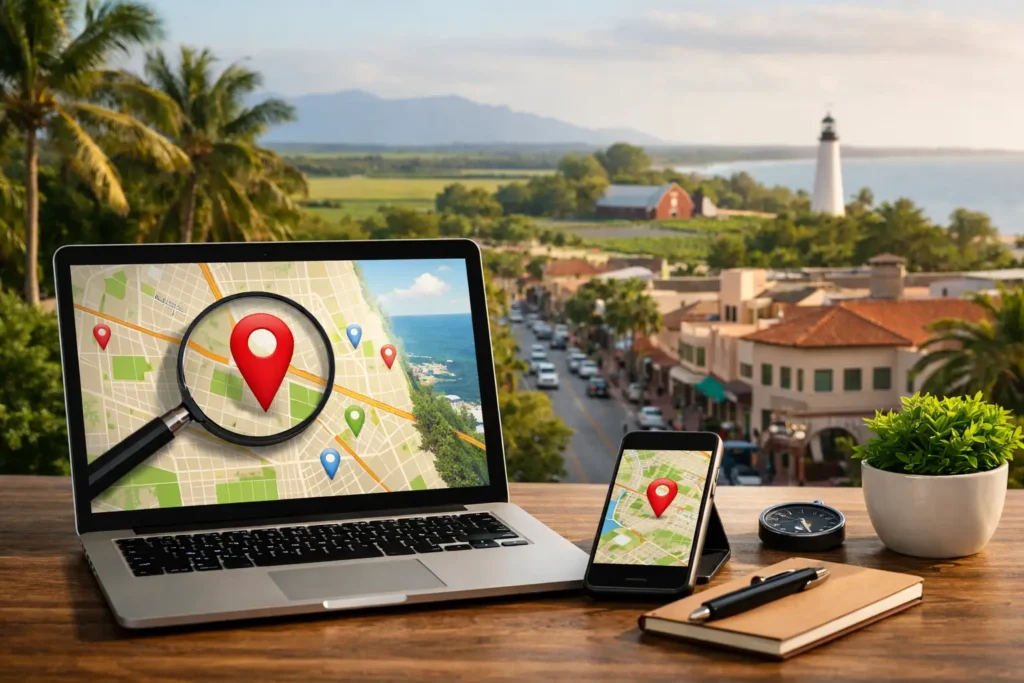
A customer in Homestead searches for a plumber, attorney, dentist, contractor, or nearby store because they need help now, not because they want to browse ten pages of results. The search for «local seo services homestead florida» is really a search for a practical way to put your business in front of those ready-to-act customers.
For local businesses, visibility is not a vanity metric. It affects calls, quote requests, direction requests, appointments, and sales. A strong local SEO strategy helps Google understand what you offer, where you serve customers, and why your business deserves to appear ahead of local competitors.
What local SEO should deliver for a Homestead business
Local SEO is the work of improving your visibility when people search for services in a specific area. It includes the results that appear in Google Maps, the local business listings under the map, and the standard organic results below them.
The goal is not simply to rank for a broad phrase such as “roofing company” or “marketing agency.” The goal is to appear for searches with clear commercial intent, such as “roof repair Homestead,” “family lawyer near me,” or “best Cuban restaurant in Homestead.” These searches are closer to a decision, which makes them more valuable.
A well-planned campaign should create measurable progress in three areas: stronger local map visibility, more qualified website traffic, and more contact opportunities from the right audience. If an SEO provider only reports impressions and rankings without connecting the work to calls, leads, or revenue opportunities, you are not getting the full picture.
Homestead also has a distinctive market. Businesses may serve residents across the city, nearby communities such as Florida City and Cutler Bay, visitors traveling toward the Keys, or customers throughout Miami-Dade County. Your SEO strategy should reflect your actual service area, not rely on generic location pages that say the same thing with different city names.
The foundation of local SEO services in Homestead, Florida
Local visibility is built on several connected assets. Your Google Business Profile is one of the most important because it can generate calls and direction requests before a customer ever visits your website. It needs accurate business categories, service details, current hours, original photos, a clear description, and regular management.
Consistency matters. Your business name, address, phone number, website, and hours should match across major business directories and local listings. Small inconsistencies can create confusion for customers and search engines, especially after a move, rebrand, phone-number change, or switch to a virtual office.
Your website must also do its job. A Google Business Profile can create attention, but your site should turn that attention into action. Every key service page should explain the problem you solve, who you serve, what makes your process different, and how a prospect can contact you. For a service-area business, it should also make clear whether customers visit your location or whether your team travels to them.
Technical quality is part of the foundation. Slow pages, broken mobile layouts, missing page titles, duplicate content, and confusing navigation can limit results. Many local searches happen on phones, often during a short window when someone is comparing providers. A site that takes too long to load or makes it difficult to call can lose leads even when it ranks well.
Start with buyer-focused local keyword research
Not every local keyword deserves equal attention. A phrase with fewer searches can be more profitable if it reflects a specific service and a customer ready to hire. For example, “emergency AC repair Homestead” may carry more value for an HVAC company than a broad informational term about AC maintenance.
Effective keyword research considers service type, location, urgency, and customer language. It also reviews what already appears in the local map pack and organic results. If the top results are directories, large national brands, or businesses with extensive review profiles, the strategy may need to focus on a more specific service angle or a nearby service area where your offer is genuinely competitive.
This is where a personalized strategy matters. An ecommerce business, a personal brand, a medical practice, and a home-services company do not need the same local SEO plan. The pages, conversion paths, content priorities, and performance metrics should be tailored to the way each business wins customers.
Build pages that answer local customer questions
Thin location pages are one of the most common local SEO mistakes. A page that repeats “Homestead” twenty times but offers no useful information rarely earns trust or long-term rankings. Google has become better at recognizing pages created only to manipulate local results.
Instead, create useful pages around core services. A contractor might have separate pages for kitchen remodeling, bathroom remodeling, roof replacement, and storm damage repair. Each page can explain the service, show relevant project examples, answer pricing or timeline questions, and describe the local areas served.
Local content can support these core pages when it is genuinely relevant. That may include a guide to preparing a property for hurricane season, a case study from a completed project, frequently asked questions about permits, or a page explaining delivery coverage. The topic should help a customer make a decision, not exist just to insert a city name.
Reviews are a trust signal, not a one-time task
Reviews influence both conversion and local visibility. A business with recent, detailed feedback looks more credible than one with a handful of old reviews, even if both have similar star ratings. Customers read reviews to assess reliability, communication, quality, and whether the business handles problems responsibly.
The right approach is to ask every satisfied customer for honest feedback through a simple, repeatable process. Do not buy reviews, pressure customers, or incentivize five-star ratings. Those shortcuts can damage trust and may violate platform policies.
Responding matters, too. A brief, professional response to a positive review reinforces your service standards. A calm response to a negative review shows future customers that you take concerns seriously. The goal is not to win an argument online. It is to demonstrate accountability.
Why cheap local SEO packages often disappoint
Low-cost packages can be tempting, especially for small businesses trying to control marketing expenses. The issue is not price alone. The issue is whether the work is strategic, transparent, and connected to your goals.
Some providers rely on automated directory submissions, generic blog posts, and monthly reports full of technical language. These activities may look busy, but they do not automatically solve the real problems preventing growth. If your Google Business Profile is incomplete, your service pages are weak, and your competitors have stronger local authority, a few automated listings will not change the outcome.
Before hiring a provider, ask what work will be completed each month, which pages or assets will be improved, how success will be measured, and who will communicate with you. You should also ask whether you retain ownership of your website, content, profiles, and advertising accounts. Clear answers are a good sign. Vague promises of “number one rankings” are not.
Local SEO and Google Ads work better together
SEO takes time because it requires Google to crawl, evaluate, and trust your business assets. Google Ads can create immediate visibility for high-intent searches while your organic presence grows. For many Homestead businesses, the best approach is not choosing one channel over the other. It is coordinating both.
Paid search can reveal which services produce the best leads, which locations convert, and what language customers use before contacting you. Those insights can improve your SEO content. At the same time, better organic pages and a stronger Google Business Profile can increase trust when prospects see your ads.
The trade-off is budget and timing. A new business with no online presence may need ads for faster lead generation. An established business with strong reviews and helpful service pages may be ready to invest more heavily in organic growth. The right mix depends on your margins, sales cycle, competition, and capacity to respond to leads quickly.
What a results-focused partnership looks like
Professional local SEO should feel like an ongoing business partnership, not a mystery service delivered behind a dashboard. The process starts with understanding your services, service area, competitors, customers, and commercial priorities. From there, the work should follow a clear plan with meaningful priorities.
At SEO Sin Frontera, that means combining technical SEO, local optimization, content strategy, web design improvements, and Google Ads support when they serve the client’s goals. A premium remote service can still be highly personal when communication is direct, decisions are explained, and the strategy is adjusted based on real performance.
Local SEO is not instant, and no honest provider can guarantee a permanent top position for every keyword. Competitors improve, search results change, and customer behavior shifts. What you can expect is disciplined work, transparent reporting, and a strategy built to attract the people most likely to become customers.
If your Homestead business is hard to find when local customers are ready to buy, start by reviewing your Google Business Profile, service pages, reviews, and lead process. Those four areas often reveal the clearest next move.