
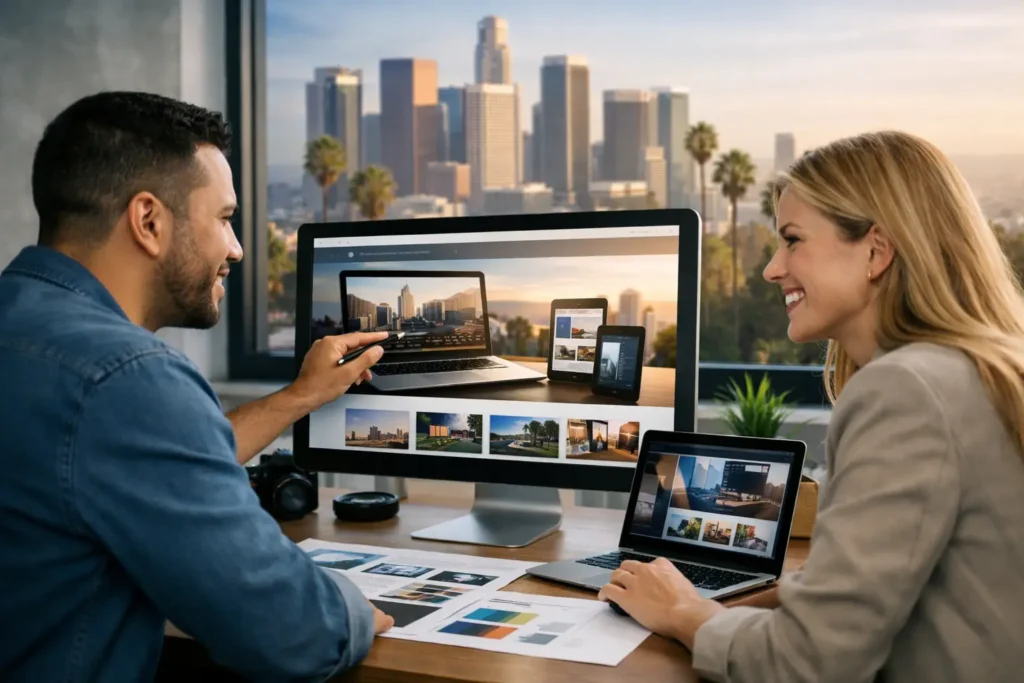
A beautiful website that does not generate calls, leads, or sales is not a business asset. It is an expense. That is the real problem many companies face when searching for web design Los Angeles services. They invest in a site that looks modern, but it loads slowly, confuses visitors, and does not support growth.
For businesses in Los Angeles, that mistake is expensive. This is one of the most competitive markets in the country. Whether you run a local service business, an ecommerce brand, a personal brand, or a growing company with national reach, your website has to do more than exist. It has to build trust fast, communicate value clearly, and turn traffic into opportunities.
What businesses really need from web design in Los Angeles
In a city as diverse and fast-moving as Los Angeles, your website has to meet different expectations at once. It should look professional, work well on mobile, reflect your brand, and guide users toward action without friction. If any of those pieces fail, visitors leave.
That is why good web design is never just about colors, animations, or trends. It is about business performance. A strong site helps a visitor understand who you are, what you offer, why they should trust you, and what to do next. That may sound simple, but in practice it requires strategy.
For small and mid-sized businesses, this matters even more. You are not trying to impress other designers. You are trying to generate revenue. A website should support your sales process, reduce objections, and make contact easy. If it cannot do that, it needs work.
Why many websites fail even when they look good
A common issue in web design Los Angeles projects is that businesses focus too much on appearance and not enough on user behavior. A sleek homepage means very little if people cannot find your services, understand your offer, or trust your company within a few seconds.
Some sites fail because they are overloaded with information. Others fail because they say too little. In both cases, the user is forced to do too much work. When that happens, they leave and search for a competitor with a clearer message.
Another frequent problem is weak structure. Navigation is confusing, service pages are vague, and calls to action are hidden or repetitive. Add slow load times or poor mobile design, and conversion rates drop fast.
There is also the SEO problem. Many websites are designed without considering how search engines read content, page hierarchy, internal structure, or user experience signals. That creates a site that may look polished but struggles to rank and attract organic traffic. Design and SEO should work together from the start, not be treated as separate tasks.
What a high-converting website should include
A website that performs well usually gets the fundamentals right before anything else. It starts with clear messaging. Within the first screen, a visitor should understand what the business does, who it helps, and what action to take next.
It also needs a logical structure. That means intuitive navigation, focused service pages, strong internal hierarchy, and content written for real users instead of generic filler. People should be able to move through the site naturally without guessing where to click.
Trust elements matter too. Reviews, case studies, certifications, real photos, company details, and direct language all help reduce hesitation. This is especially important for service businesses, local companies, and premium providers. If your site feels vague or impersonal, prospects may assume your service is too.
Then there is performance. A modern website should load quickly, display properly on every screen size, and avoid design choices that slow down the experience. Fancy effects are fine when they support the brand, but not when they get in the way.
Finally, every page should have a purpose. Some pages are meant to rank. Some are meant to educate. Some are meant to convert. When every page tries to do everything, results usually suffer.
Web design Los Angeles businesses should prioritize
Los Angeles businesses often serve audiences with high expectations and many alternatives. That means your website needs to communicate quality without creating confusion. The best approach is usually a balance between visual credibility and conversion strategy.
For local businesses, location relevance matters. Your site should clearly mention areas served, showcase local trust, and make it easy for nearby customers to contact you. For ecommerce brands, the focus may shift toward product discovery, category structure, checkout experience, and trust around shipping or returns. For personal brands and professionals, authority and positioning often carry more weight than visual complexity.
This is why custom strategy matters. A law firm, a med spa, a consultant, and a home service company do not need the same website, even if they are all based in Los Angeles. Their buyers have different concerns, different decision timelines, and different triggers for taking action.
A good agency will not force every project into the same formula. It will study your market, your offer, your goals, and your sales process before recommending structure, content, and design direction.
Design without strategy is usually a short-term fix
Some businesses redesign their site because they are tired of how it looks. That is understandable, but appearance alone rarely solves the real problem. If leads are low, bounce rates are high, or users do not convert, the issue often starts deeper.
Maybe the messaging is weak. Maybe the wrong traffic is landing on the site. Maybe the homepage tries to speak to everyone and ends up connecting with no one. Maybe the site has no SEO foundation, so even a polished redesign still depends completely on paid traffic.
This is why the best web projects begin with questions, not mockups. What are your most profitable services? Where are current leads coming from? What pages do people visit before contacting you? What objections do prospects usually have? What keywords matter for your market?
When strategy leads the process, design becomes much more effective. It is no longer decoration. It becomes a tool that supports visibility, credibility, and conversions.
How SEO and web design work together
A business website should not force you to choose between ranking and aesthetics. You need both. SEO brings qualified visitors, and design helps convert them.
When SEO is ignored, your site may struggle to appear in relevant searches. When design is ignored, traffic arrives but does not become revenue. The strongest websites are built with both in mind from day one.
That includes page speed, mobile usability, metadata structure, content hierarchy, service page targeting, and user flow. It also includes writing content that is useful and persuasive instead of stuffing keywords into awkward copy.
For companies that want steady growth, this matters a lot. Paid ads can produce quick traffic, but organic visibility often lowers acquisition costs over time. If your website is built correctly, it can support both channels at once.
This integrated approach is especially valuable for businesses that want long-term results instead of constant patchwork. At Seo sin frontera, that kind of alignment matters because a website should not just look professional on launch day. It should keep working as your business grows.
How to choose the right web design partner
If you are comparing providers, do not judge based only on portfolio style. Ask how they approach conversion strategy, SEO structure, content planning, and post-launch support. A site may look attractive in screenshots and still perform poorly in the real world.
You should also pay attention to communication. A premium service is not just about the final design. It is about how the project is managed. Clear timelines, honest recommendations, fast feedback, and personalized attention make a major difference, especially for growing businesses that cannot afford delays or confusion.
Be careful with agencies that promise everything instantly or treat your project like a packaged commodity. Your business is not generic, and your website should not be either. The right partner will understand your goals, explain trade-offs clearly, and recommend what makes sense for your stage of growth.
Sometimes a fully custom site is the right move. Sometimes a focused redesign of key pages is enough. Sometimes the bigger issue is not design at all, but copy, SEO, or offer positioning. A trustworthy agency will tell you the difference.
A website should help you sell with confidence
A strong website makes every other marketing effort work better. It improves the results of your SEO, your Google Ads, your social media traffic, and your referrals. It gives people a place to verify your credibility and take the next step.
That is the real value of investing in web design Los Angeles companies can rely on. You are not paying for a prettier homepage. You are building a digital sales asset that supports visibility, trust, and growth.
If your current site feels outdated, inconsistent, slow, or unclear, that is usually not just a design issue. It is a business opportunity waiting to be fixed. The right website can make your company look more established, communicate your value faster, and help more of the right people contact you when they are ready to buy.